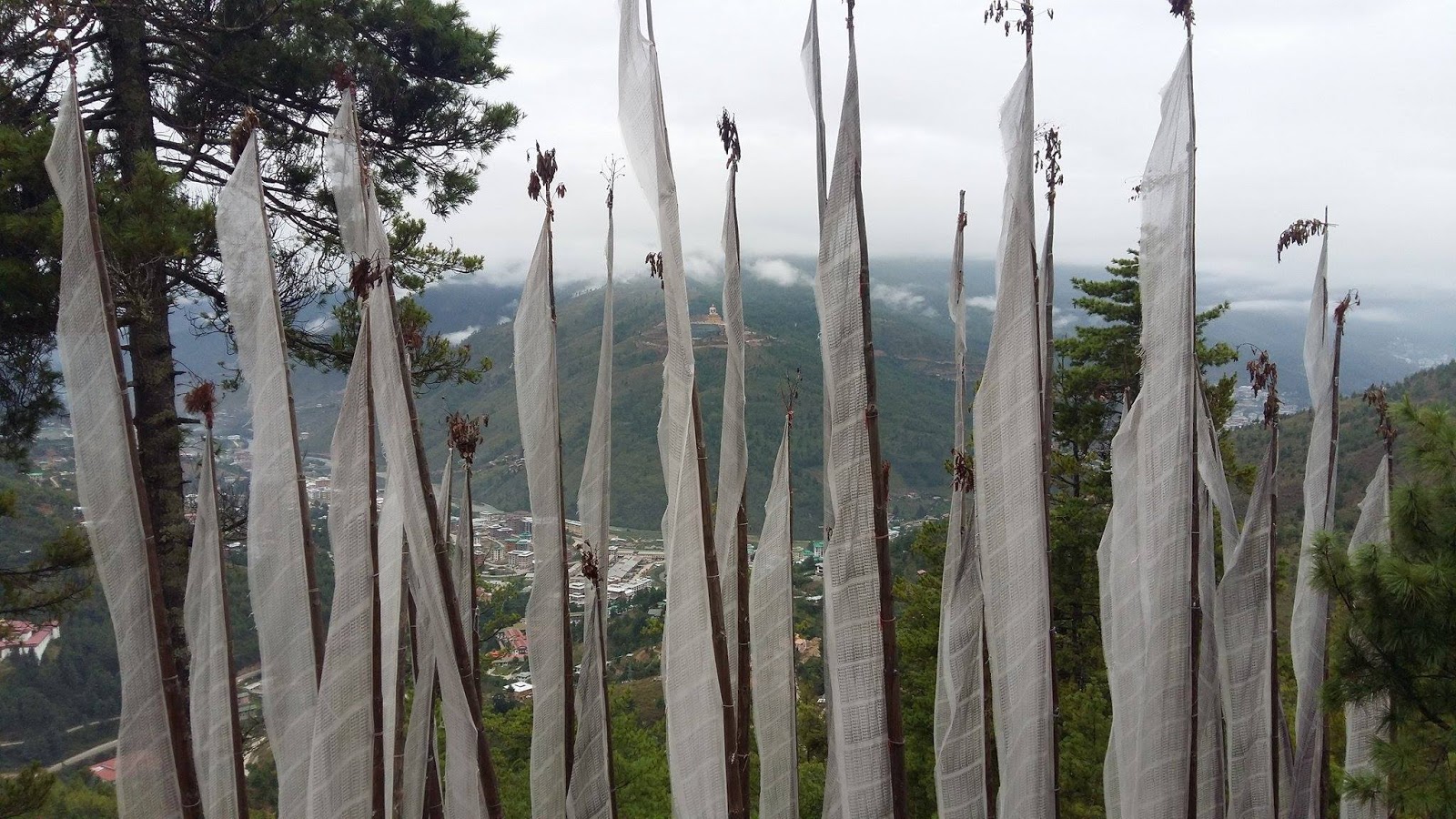
 And still to this day most people insist on wooden poles. This comes at a time when we face difficulties in conserving our forest and keeping our constitutional promise to the future generation. But again the issue concerning the dead is a sensitive one that requires utmost care. On one hand, we need to respect the sentiments of those bereaved family members and on the other, it is important to protect our forest.
 Realizing this, a few years ago, the Ministry of Agriculture and Forest (MoAF) encouraged people to use bamboo poles instead as they are stronger and more durable. The same poles, unlike their wooden cousins, can be reused multiple times. This was a perfect substitute and the whole nation praised the idea. It was a big relief to many nature conservationists. But again it was not a law and thus many continued to cut down trees. That calls for stricter regulations by the Ministry. And maybe we need to request Dratshang Lhentshog to put an end to people's doubts and clarify that hoisting prayer-flags is same, irrespective of the type of poles used.
 And to our relief, of late, a new idea has come to Bhutan. I have seen them along our national highways, too. Some people maintain that it is derived from Tibetans.
  But it is good because it encourages people to use neither trees nor bamboo poles to erect prayer flags. The whole idea is to string the prayer flags together vertically and hang them by two strings that are tied to two different standing trees or poles horizontally. This way we can hoist a lot more flags with less effort. At the end, I am sure, the benefit for the dead person's soul is the same as the number of frames on fluttering prayer flags is much more than on conventional prayer flags.
 This is the 21st Century idea and a fitting solution to our dilemmas. I feel that MoAF and other agencies including Dratshang Lhentshog must promote and encourage this form of prayer flags and put an end to pressure on our forest.
Comments
Post a Comment
So what do you think?